



Key Takeaways
-
Use more than one security control (multi-factor authentication, least-privilege access, encryption, monitoring) to reduce the risk of a breach.
-
Attacks can lead to disrupted operations, financial losses, delayed billing, reputation damage, increased IT workloads and job loss.
-
Modern EMM/MDM tools help secure various types of devices from one central location.
What Is a Data Breach?
A data breach is no longer just an IT problem. It affects the whole business, the brand and even personal safety. Cyber attackers in 2026 move quickly, use AI and often take advantage of weaknesses like poor access controls or simple passwords.
The good news is that most attacks can be prevented using proven security practices.
As credential theft and social engineering attacks grow, it’s important to understand where threats come from. Recent healthcare incidents show how breaches happen, what they cost and which controls provide early protection.
This blog outlines practical steps to protect your data and prevent leaks across devices and apps.
What Causes Data Breaches?
Most Breaches Start With:
-
Compromised login information
-
Phishing
-
Misconfigured or unsecured remote access
These are common entry points because when attackers get hold of a single password or find an unpatched system, they don’t need to break in – they simply log in and gain full access.
The 2024 Change Healthcare attack is a strong example: a compromised remote access portal led to nationwide disruption across pharmacies, providers and billing systems. By 2025, more than 190 million individuals were impacted. It is considered the largest healthcare data exposure on record in the U.S.
One of the key problems was that MFA was not being used.
Which Security Controls Stop Cyberattacks Early?
-
Use authentication methods – such as multi-factor authentication (MFA) – across all access points.
-
Separate critical systems to limit impact.
-
Monitor unusual login behavior to catch cyberattacks quickly.
What Are the Business Consequences of a Cyberattack?
The effects go far beyond the first outage. They include financial losses, delayed billing, reputation damage, increased IT workloads and, in some cases, job loss for senior leaders responsible for security oversight.
IBM’s 2025 Cost of a Data Breach Report found that the average global breach costs $4.44M, and U.S. breaches at $10.22M.
Which Security Controls Prevent & Contain Data Breaches?
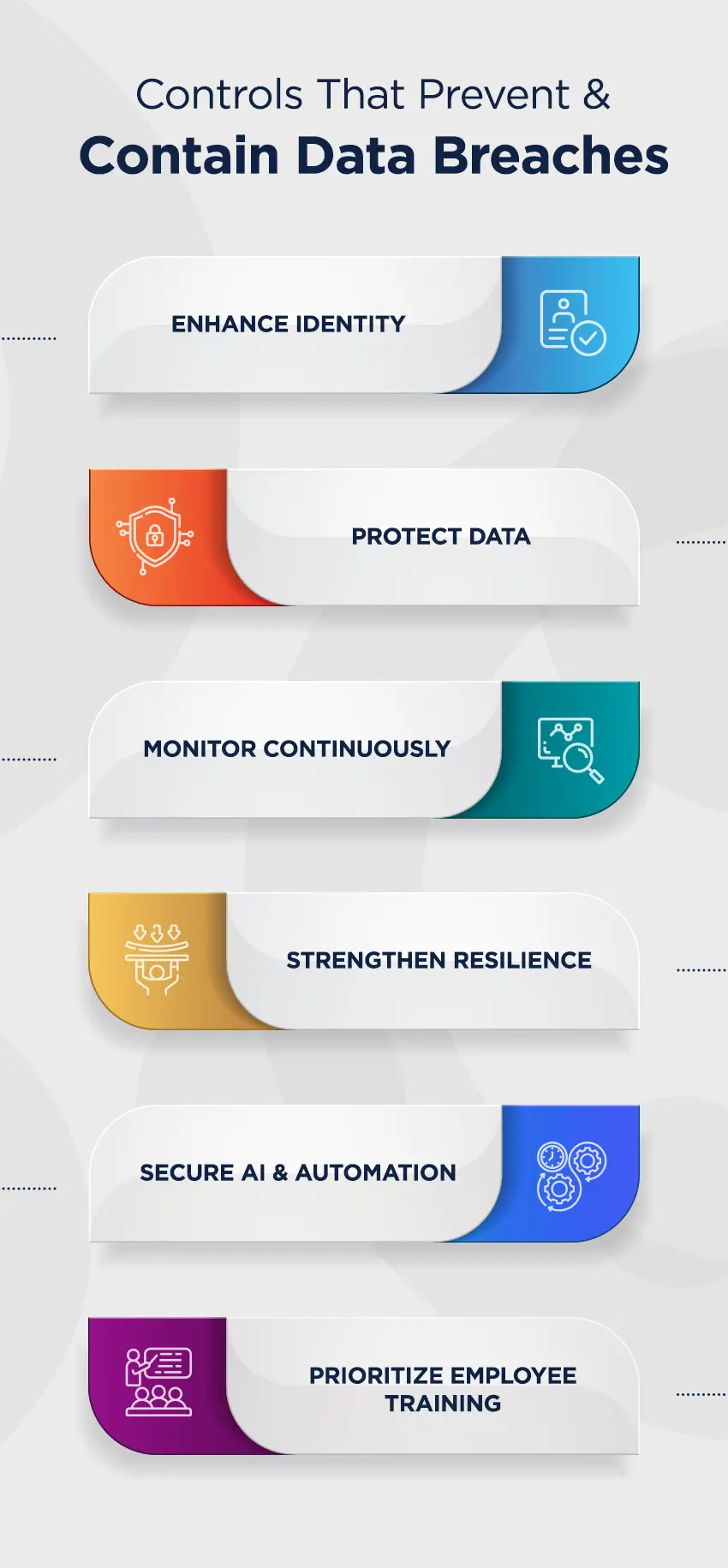
Enhance Identity:
-
Use MFA.
-
Give access only to people who need it.
Protect Data:
-
Encrypt sensitive data while it’s stored and while it’s moving.
-
Remove outdated protocols.
Monitor Continuously:
-
Watch devices and networks for suspicious activity.
-
Set up automated alerts.
Strengthen Resilience:
-
Keep backups with offline copies.
-
Run ransomware recovery drills.
Secure AI & Automation:
-
Set clear rules and access controls for AI tools, including auditing.
-
Watch for “shadow AI” systems outside approved tools.
AI now plays a major role in both cyberattacks and defense. Attackers use AI for phishing campaigns, malicious bots and credential testing. Defenders use AI to find issues and reduce alert fatigue.
To stay safe, use AI within your security protocols, including access controls, usage reviews and approvals for new tools.
Best Practices for Securing Mobile Devices at Scale
Mobile devices are common entry points for attackers. Many teams use large fleets of devices in fast-paced and critical environments. Smartphones, tablets, scanners and label printers all support this crucial work, but if they are unpatched or unmanaged, they become easy targets.
Modern Mobile Device Management (MDM) Solutions Help Keep Devices Secure by:
-
Enforcing security policies across all devices.
-
Pushing patches and updates from a central console.
-
Locking or wiping lost or stolen devices.
-
Ensuring all devices meet compliance standards across diverse environments.
Strong MDM solutions give organizations real-time visibility and control. This reduces mistakes, prevents outdated devices from becoming liabilities and keeps frontline operations running smoothly.
As industries continue to digitize, the risks also increase. Many organizations still rely on outdated, legacy technology that cannot support today’s security standards, which makes networks and corporate devices vulnerable to attacks.
Steps to Reduce Data Breach Risks
-
Update or replace outdated systems.
-
Improve how systems connect, share data and operate with each other.
-
Centralize endpoint and device management.
Cybersecurity Trends in 2026
-
AI is advancing quickly and becoming harder to secure against.
-
The global cybersecurity market has now passed 300 billion USD.
-
According to the World Economic Forum, 91% of the largest organizations have changed cybersecurity strategies because of geopolitical tensions.
Conclusion
Preventing data breaches starts with identity controls, real-time visibility and consistent security practices. Strong governance and automation help teams respond quickly when something goes wrong. Assume attackers will test for stolen credentials and use AI to target weak access points, including untrained employees.
The most successful organizations are not the ones with the most tools. They are the ones that update regularly, monitor constantly, adapt to new threats and train employees on cybersecurity best practices.