



Data privacy has become one of the most critical business issues in 2026, as companies rely on more mobile devices, cloud platforms, AI tools and connected systems than ever before. Customer trust, regulatory compliance and brand reputation now depend on how well businesses can protect sensitive information.
From the hidden dangers of AI to cloud security issues, understanding the privacy risks that organizations face every day is the first step in building a strong business data protection plan.
Key Takeaways
Data privacy risks are increasing due to AI, cloud apps and mobile workforces.
Businesses must balance data use with rising digital privacy concerns.
Compliance laws like GDPR affect companies of all sizes.
The right tools and policies can reduce data privacy issues significantly.
What Are the Main Data Privacy Challenges for Businesses?
The biggest challenge is managing large volumes of data without increasing exposure to risk. Businesses collect customer, employee and operational data across many systems, often without full visibility.
Common Challenges
Limited control over mobile and IoT devices
Poor visibility into where data is stored
Compliance with data privacy laws within retail and other highly regulated industries
Top Data Privacy Risks in the Digital Age
Unauthorized Data Access & Breaches
Weak passwords, lost devices and unsecured endpoints can expose sensitive data. A single breach can result in thousands of dollars in fines, excessive downtime and a loss of customer trust.
AI & Privacy Risks
Privacy concerns are rising as businesses use machine learning to analyze customer data. Without proper controls, AI systems can misuse information or introduce compliance risks. As a result, organizations are investing more heavily in privacy, with 90% expanding their privacy programs due to AI and 43% increasing their overall privacy spending.
Big Data Privacy Issues
Large datasets often include personal data that wasn’t collected with clear consent. This creates major privacy issues, especially when data is reused across teams.
Cloud Security & Privacy Apps
Cloud tools improve productivity, but misconfigured apps can expose data. Cloud security and privacy must be managed centrally to avoid gaps.
Social Media Privacy Threats
Employee use of social media platforms can unintentionally expose business or customer data. These privacy issues are often overlooked as the scale of online activity continues to grow.
AI & Privacy: Key Concerns for Businesses
The rapid pace of AI adoption has introduced new data privacy challenges, requiring businesses to ensure responsible data use.
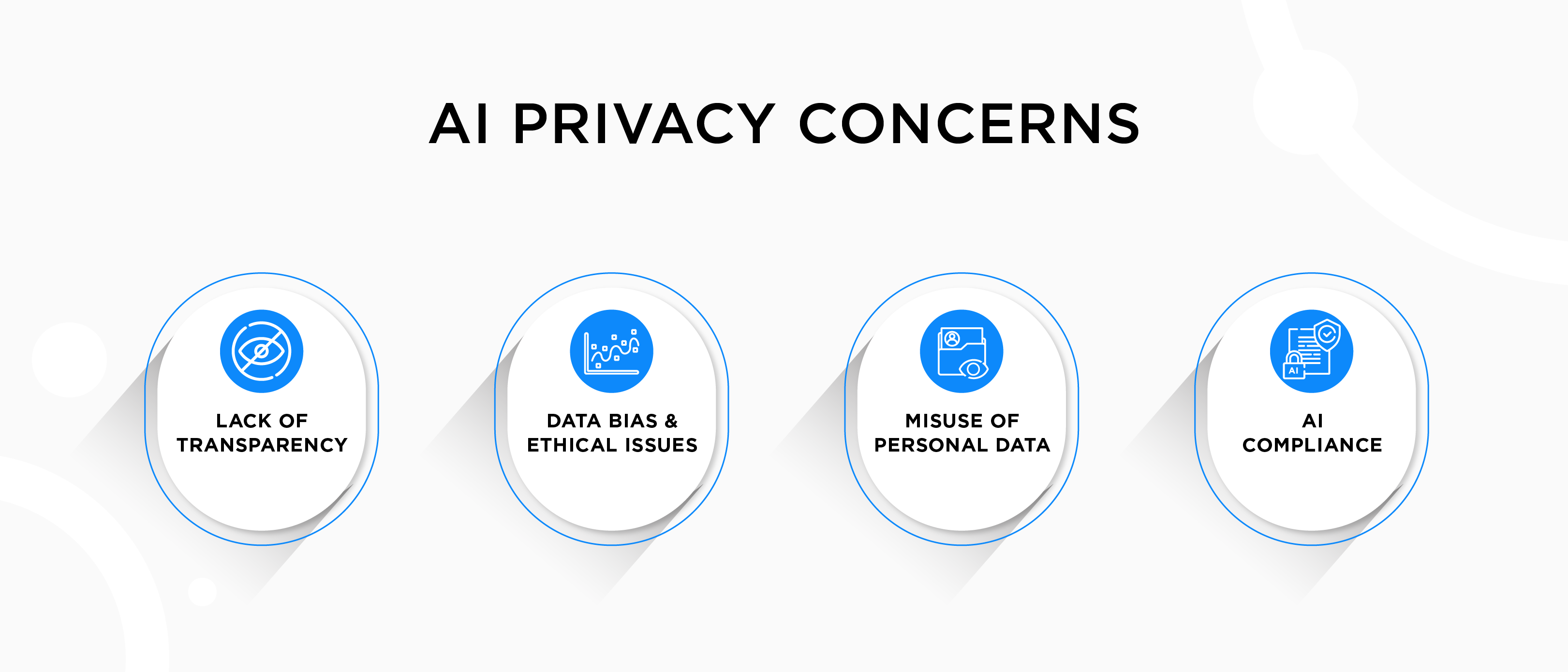
Lack of Transparency in AI Models
Many AI systems operate with limited visibility into how inputs are processed and how decisions are ultimately made. From an organizational perspective, this lack of transparency makes it difficult to fully understand or explain outcomes. Teams may struggle to validate results, detect errors or recognize consequences. This creates gaps in accountability, where decisions can impact customers or operations – eroding trust and increasing reputational risk.
Data Bias & Ethical Considerations
AI systems are trained on specific datasets, which means that their outputs are entirely dependent on the quality and representativeness of that data. When data is incomplete, outdated or reflects existing human biases, AI can unintentionally reinforce these patterns by producing skewed outcomes. In practice, this means decisions may systematically disadvantage certain groups, even without explicit intent. These outcomes are often difficult to detect early, creating significant legal exposure and long-term reputational damage.
Misuse of Personal Data
The data collected to train AI may be sensitive, personal or confidential. When that data is reused or repurposed without clear consent or proper controls, it introduces serious privacy concerns. In many cases, organizations may not have full visibility into how data is being used across models.
AI Compliance & Regulatory Risks
The regulatory landscape for AI and data privacy is evolving rapidly, with new requirements emerging across regions and industries. Many organizations struggle to keep pace, especially as AI systems become more complex and less transparent. Without strong governance and oversight, it is difficult to demonstrate how data is being used, how decisions are made or whether systems meet compliance standards.
Privacy Risk Table with Examples
Risk Type | Example | Impact | Solution |
Data Breach | Lost employee device | Financial loss, fines | Device management and encryption |
AI Misuse | AI analyzing customer data without consent | Compliance violations | Privacy‑first AI policies |
Cloud Misconfiguration | Public cloud storage exposure | Data leaks | Centralized cloud controls |
Social Media Exposure | Employees sharing sensitive info | Brand damage | Security training |
Non‑Compliance | GDPR violations | Legal penalties | Automated compliance tools |
Business Data Protection Strategies
A strong business data protection plan requires technology, policy and employee training working together.
Implementing Strong Access Controls
Limit access based on user role, device type and risk level to reduce unauthorized use.
Applying principles like least privilege and using multi-factor authentication ensures employees can only access the data and systems necessary for their job.
Data Encryption & Secure Storage
Encrypt data both at rest and in transit to protect sensitive information from being intercepted.
Strong encryption standards help safeguard data even if systems are compromised.
Privacy-First Data Governance
Establish clear data governance policies to define how data is collected, used, stored and shared.
A privacy-first approach helps organizations innovate responsibly while meeting regulatory requirements and maintaining customer trust.
Employee Training & Awareness
Regular training programs reinforce security best practices and help employees recognize risks such as phishing or data mishandling.
Ongoing awareness reduces human error and supports long-term compliance across the organization.
Conclusion
As businesses rely on more data across AI, cloud and mobile, privacy risks continue to grow. Addressing them requires a unified approach built on visibility, control and strong governance.
SOTI helps organizations reduce risk, strengthen compliance and manage devices with confidence.
Improve your data privacy strategy today:
Book a demo or contact us to see how SOTI can help.