


A data breach can disrupt operations, damage trust and lead to serious financial loss. The business impact of a data breach can be long-lasting – from customer distrust to legal exposure. This blog explains how to spot a breach, understand the impact and implement a clear response plan to protect your organization.
Key Takeaways
A data breach can impact finances, reputation and customer trust.
Early detection reduces damage.
Quick response is critical to protect your business and customers.
Strong prevention and monitoring practices can help you avoid future incidents.
Signs of a Data Breach
Suspicious Account Activity
Unexpected password resets
Login attempts from unknown devices or locations
Locked accounts
Receiving Notifications
Messages from vendors about unusual access
Unusual Financial Transactions
Small “test charges” on bank accounts
Unauthorized purchases
Credit alerts for accounts you did not open
Device Security Issues
Devices run slowly
New apps appear that you did not install
Security warnings or antivirus alerts
What Are the Consequences of a Data Breach?
Impact of a Data Breach on Your Business & Finance
A breach affects more than IT. It impacts operations, compliance, trust and revenue. A real-world data breach can affect billions of users and add up to hundreds of millions of dollars, including:
Financial losses from fines, legal fees, investigation costs and downtime.
Loss of productivity as teams respond and systems are repaired.
Higher cyber insurance premiums.
Delayed projects and strained customer relationships.
Impact on Customers
Exposure of sensitive and personal information
Service disruption
Long-term concerns about device security
Reduced brand trust
Step-by-Step Best Practices After a Data Breach
A data breach can escalate quickly, and what happens in the minutes and hours that follow often determines the impact on your organization. That’s why having clear, actionable steps in place after a breach is detected is essential. The following best practices break down exactly what to do after a breach – helping teams respond with confidence, limit damage, meet regulatory obligations and strengthen security for the future. This structured approach ensures nothing is missed when it matters most.
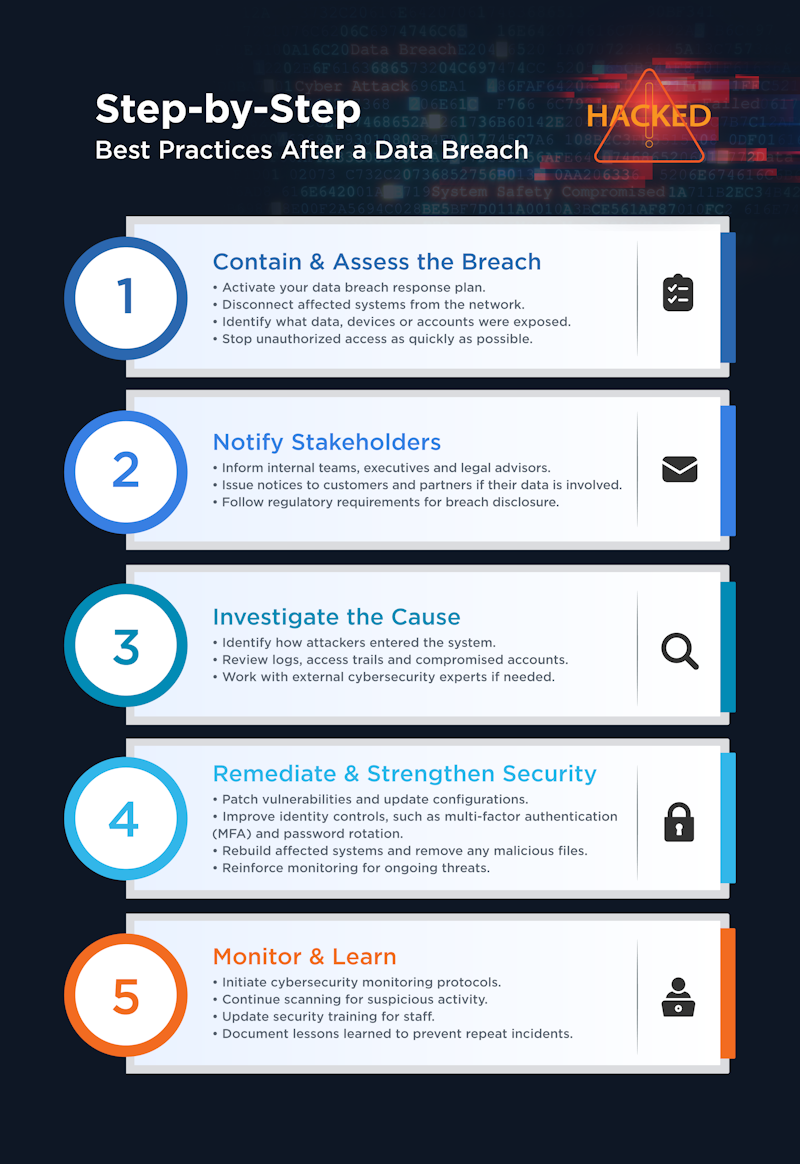
1. Contain & Assess the Breach
Activate your data breach response plan.
Disconnect affected systems from the network.
Identify what data, devices or accounts were exposed.
Stop unauthorized access as quickly as possible.
2. Notify Stakeholders
Inform internal teams, executives and legal advisors.
Issue notices to customers and partners if their data is involved.
Follow regulatory requirements for breach disclosure.
3. Investigate the Cause
Identify how attackers entered the system.
Review logs, access trails and compromised accounts.
Work with external cybersecurity experts if needed.
4. Remediate & Strengthen Security
Patch vulnerabilities and update configurations.
Improve identity controls, such as multi-factor authentication (MFA) and password rotation.
Rebuild affected systems and remove any malicious files.
Reinforce monitoring for ongoing threats.
5. Monitor & Learn
Initiate cybersecurity monitoring protocols.
Continue scanning for suspicious activity.
Update security training for staff.
Document lessons learned to prevent repeat incidents.
Don’t wait for a breach to happen. Contact us to learn how SOTI can strengthen your security posture and help you respond faster when it matters most.