



Years ago, “personalization” in retail meant putting a customer’s name in an email. Now, it means shaping the product they see on a website, what deals they’re offered at checkout and what their retail store experience is like.
This blog explains how personalization has changed retail—and how retailers can keep up with what customers expect today.
Key Takeaways
Personalization used to be a bonus. Now, customers expect it for a top-tier retail store experience. Retailers who don’t offer it will lose shoppers to those who do.
The biggest wins come from connecting your online and in-store experiences, so they feel like one smooth customer journey.
AI in the industry is gaining popularity, but customers need to trust it before they embrace it.
Technology should make the customer journey easier, not harder. The retailers who get that balance right will stand out.
Why Personalization Matters in Retail
Did You Know Personalized Shopping Experiences Influence Where Customers Buy?
Today’s shoppers want brands to understand what they like and what they need. In fact, 58% of consumers say they choose where to shop online based on how retail personalization feels.
That’s a big deal! It means personalized shopping now drives revenue, not just engagement. When customers feel understood, they come back more often—and they spend more when they do.
But delivering on this expectation isn’t simple. It takes the right data, the right tools and the ability to use both without losing customer trust.
How Customers Feel About AI in Retail
Artificial intelligence (AI) in the retail industry is now a big part of how personalized shopping happens. It powers product recommendations, chatbots, pricing, and inventory tools.
Customers are also becoming more comfortable with it. 58% say they’re fine if retailers use AI as long as it means getting a more personalized shopping experience.
But being okay with something isn’t the same as trusting it. Many shoppers are still concerned about how their data is collected and used. Retailers need to be upfront and tell customers what they’re doing with their data and give them control over it.
How Retail Technology Enhances Staff…Without Replacing Them
Some people think that adding more technology to retail means replacing staff with screens. But the data tells a different story.
It reveals that two truths coexist:
58% of consumers want more technology-enhanced shopping.
94% of shoppers say good customer service makes them likely to buy from a brand again.
Technology works best when it removes bottlenecks and frees up staff to focus on the moments that need human touch. Self-checkout is a good example. It works because it fits naturally into the customer journey. It handles a routine task quickly without needing customers to learn anything new. Staff then have time to help customers find items faster, respond to queries or concerns—such as product-related questions or returns—and assist customers with technology that might be less intuitive or challenging to use.
That’s the test for any new retail technology: Does it make the experience simpler or just more complicated?
The Biggest Challenges in Personalizing Customer Experiences
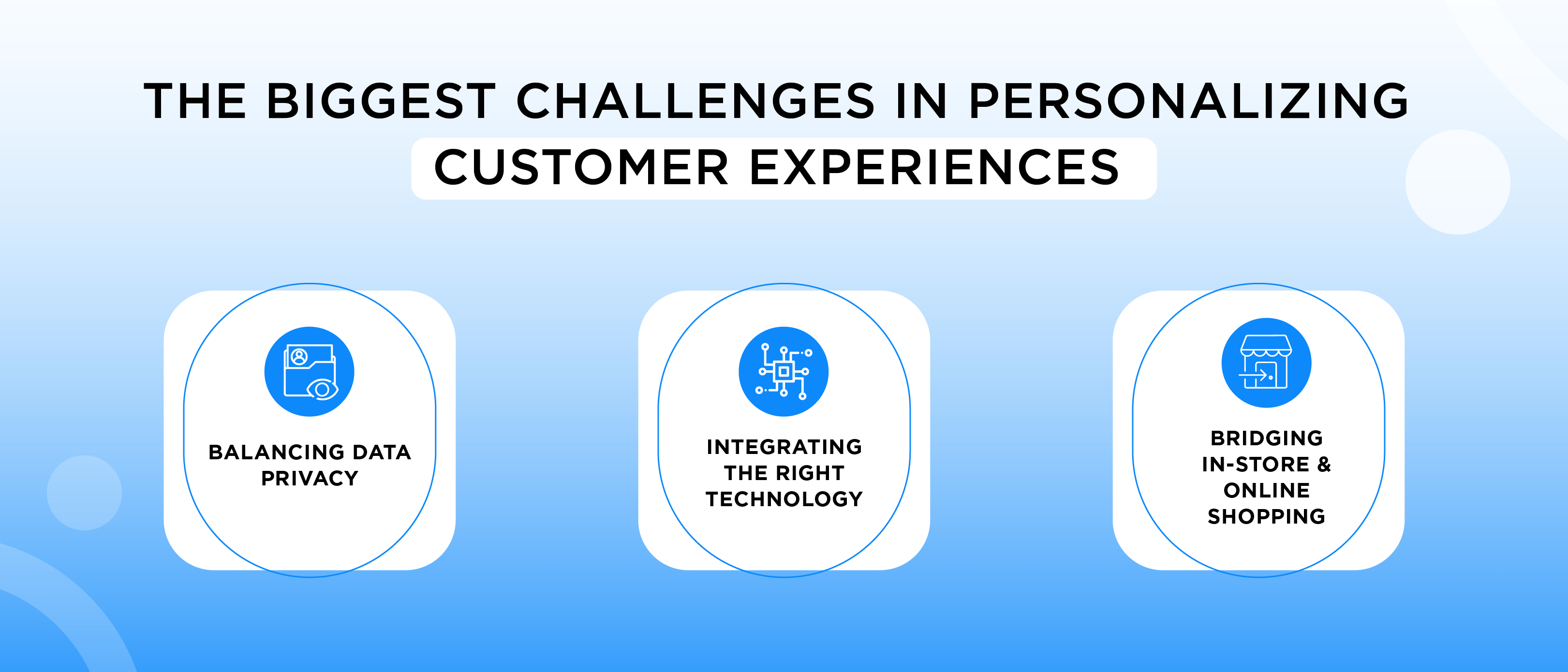
If personalization were easy, every retailer would already be doing it well. The following three challenges explain why most aren’t.
1. Balancing Data Privacy & Personalization in Retail
Personalization needs data, like browsing history, past purchases or location preferences. But every piece of data collected introduces new privacy and security risks.
For instance, 41% of consumers have experienced fraud while shopping, and 52% worry about the safety of their online transactions. These concerns lead to real consequences:
Abandoned carts
Customers who won’t share information
Shoppers switching to competitors who appear safer
Retailers need to earn the right to customer data. That means visible security, clear privacy policies and honest communication when things go wrong.
2. Adding More Technology Doesn’t Always Translate to Better Experiences
New technology tools come out constantly, each promising to change the game. The temptation to adopt everything is real, but it usually backfires without thoughtful, data-driven decision-making.
Customers often don’t care how advanced your technology is. They care if it works. A slow app, a confusing kiosk, or an AI chatbot that can’t answer basic questions will push people away.
If a competitor’s shopping experience is more seamless, customers will switch. So before any new technology is added, retailers should ask themselves, “Does this make the shopping experience better for customers?”
3. The Gap Between Online & In-Store
90% of consumers shop both online and in store. When those two experiences feel disconnected, it undermines trust. Common problems include:
Prices that differ online versus in store
Promotions that only work on the website, not at a physical location
Items listed as “In stock” online but are unavailable in store
Every one of these friction points erodes customer trust. Fixing this requires systems that share information in real time and teams that work together rather than in silos.
How Retailers Can Use Technology Effectively
Make AI Product Recommendations Feel Natural to Retail Shoppers
While 6 in 10 consumers appreciate personalized customer experiences, only 25% actively prefer using AI for online shopping. That gap mostly comes down to design.
AI tools that are buried in menus or have poor user experience won’t get used, while the ones that are intuitive and genuinely helpful will more likely get adopted. Think product suggestions that appear naturally, search results that seem to read your mind, and prompts that feel like a helping hand, not an ad.
The goal isn’t more sophisticated AI. It’s making the AI you already have easier and more useful.
Mobile & In-Store Tools That Cut Friction
Technology should make things easier for both retail staff and customers. Examples include:
Mobile point-of-sale (POS) systems that reduce checkout wait times and free staff from being tied to a register
Kiosks that let customers find products and check inventory levels on their own
Digital signage that can display relevant deals based on the time of day and where it is located within the store
Mobile apps that give customers access to exclusive savings, provide updates to product offerings, and enable faster checkout
These aren’t flashy innovations. They’re practical ones, and that’s why they work. Currently, 49% of consumers use retail apps for convenience and savings. Mobile tools don’t need to be revolutionary. They just need to do their job well.
Using Customer & Operational Data More Effectively
Purchase history, location data and browsing behavior. All this information gives retailers an edge, but only if it’s used well. Machine learning in retail can find patterns, predict what customers want and trigger the right offer at the right time.
One study found that 80% of consumers prefer personalized experiences and will spend up to 50% more with brands that offer them.
But customer data is only part of the equation. Retailers also need visibility into the devices, applications and systems that support the customer journey. When mobile POS systems fail, kiosks display inaccurate information, or inventory applications stop syncing, even the best personalization strategy can fall apart.
By combining customer insights with operational visibility, retailers can identify issues faster, reduce disruptions and maintain consistent experiences across channels.
Solutions within the SOTI ONE Platform enable retailers to manage devices, diagnose issues remotely and automate workflows, helping teams spend less time on troubleshooting and more time on delivering superior customer experiences.
Where to Start
Improving the retail store experience takes time, coordination and the right tools. No single solution fixes everything, but a solid foundation makes everything else easier.
Device management platforms, automated workflows and other diagnostic tools help make sure the technology customers and retailers rely on actually works. When operations run smoothly in the background, retail associates can focus on what really matters: the customers in front of them.
If you’re looking to strengthen your operations while delivering more personalized shopping experiences, SOTI is the next practical next step. Learn how the SOTI ONE Platform can elevate the customer journey today by booking a demo or contacting us for more information.