


Cybersecurity has become paramount to almost every organization today. As more and more of the world becomes interconnected and both personal and corporate data is held in digital spaces, the risks have increased drastically. Cyberattacks have evolved over the past decade, and they are everywhere—exemplified by the growing number of cyberattacks across the UK and the U.S.
From small businesses to large enterprises, every organization is a potential target. In this blog, we’ll explore what’s new in the 2026 cybersecurity threat landscape. We’ll also answer common questions and highlight the most pressing risks for companies.
Key Takeaways
-
Cybersecurity is critical in 2026 as attacks grow more sophisticated.
-
Most common cybersecurity threats: phishing, ransomware, human error, weak passwords, unpatched systems.
-
Other threats: DDoS, malware, cloud misconfigurations.
-
Best practices: Use MFA, ensure employees are trained, enable patch automation, draft an incident response plan, and leverage Enterprise Mobility Management (EMM) software.
-
Cybersecurity is the foundation of trust for customers.
What Are Cybersecurity Threats?
Cybersecurity threats are malicious attempts to compromise systems, steal data, or disrupt operations. Attacks can come from hackers, inside the organization, or even automated bots. Common examples include phishing, ransomware and malware. For businesses, these threats can lead to cybersecurity breaches, financial loss and reputational damage.
Common Cybersecurity Threats That Involve Human Interaction
The most common threats—and debatably the most malicious—are those that use psychological manipulation to trick people into revealing sensitive information or granting access to corporate networks and data. Also known as social engineering, these cyberattacks take on a variety of forms:
Phishing
Phishing is a tactic where an email received appears to come from a legitimate source. The message may ask recipients to provide sensitive information, complete an action, click a harmful link or download a dangerous attachment.
Scareware
Scareware is an attack where a threat actor convinces recipients that their computer or network is at risk in hopes that they take certain actions.
Pretexting
Pretexting is when attackers create false scenarios to build trust and then get the victim to divulge sensitive details.
Smishing
Smishing is similar to phishing except it targets people via SMS messaging. Examples include delivery alerts, bank warnings, etc.
Social engineering is dangerous because it bypasses technical defenses and exploits human trust. It often leverages urgent language to create panic, curiosity or greed.
What Are the Most Common Cybersecurity Threats for Businesses in 2026?
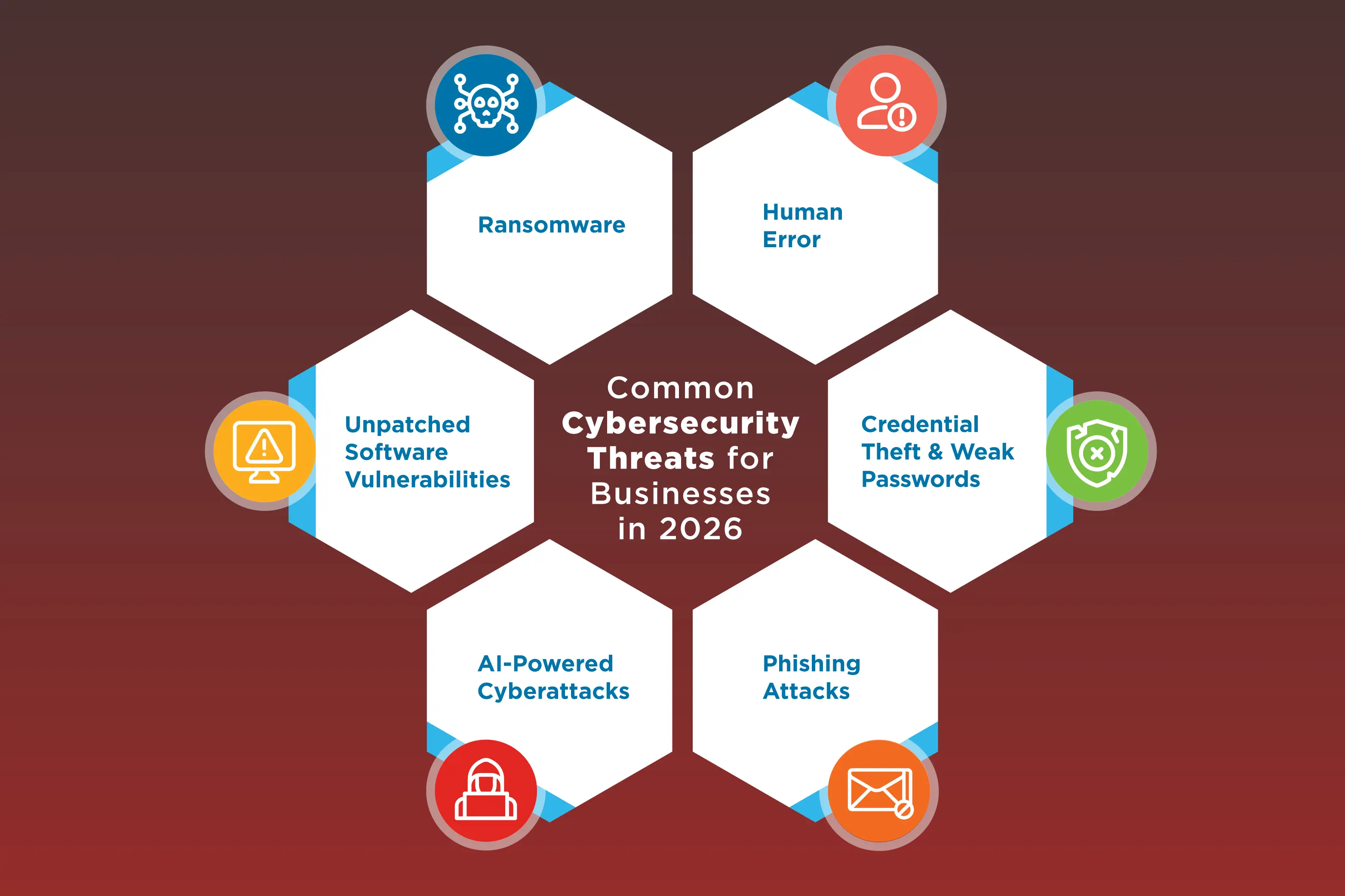
Businesses face a wide range of threats, but the most frequent and damaging include:
-
1. Phishing Attacks
-
As mentioned, these are fake emails designed to steal credentials. They are the most common entry point for breaches.
-
2. Ransomware
-
By clicking a malicious link or email attachment, this software gains access to your networks, encrypting files or locking your computer. Attackers then demand payment in return for the decryption key or for data release.
-
3. Human Error
-
Employees may accidentally share sensitive data, click infected links or misuse corporate access—unintentionally exposing data. With remote work on the rise, the risks of mistakes continue to grow.
-
4. Credential Theft and Weak Passwords
-
Poor password hygiene—such as reusing passwords—and not enabling multi-factor authentication (MFA) make it easy for attackers to gain unauthorized access. With valid credentials, attackers can then move through systems undetected.
-
5. Unpatched Software Vulnerabilities
-
Outdated systems are prime targets for exploitation. Without prompt and automated patching, hackers scan for vulnerabilities and use them to gain entry. In 2026, patch management is more critical than ever, as there is an ever-growing complexity of IT environments.
-
6. AI-Powered Cyberattacks
-
Attackers are leveraging AI systems to automate and scale attacks. Whether using AI to craft strong phishing campaigns or to evade threat detection, businesses must be proactive and remain diligent in their security posture.
These risks highlight why cyber security solutions are essential for companies of all sizes. Cyber security for small businesses is just as critical because attackers often see them as easy targets.
Why Cybersecurity Is More Dangerous in 2026?
Beyond the cybersecurity risks mentioned above, there are other threats organizations should watch out for in 2026:
-
Distributed Denial of Service (DDoS) Attacks – These attacks focus on overloading systems, networks or applications with massive traffic to disrupt operations. Attackers can also amplify attacks through botnets, which is becoming quite common.
-
Malware and Spyware – Malware refers to malicious software designed to damage systems, steal data, or gain unauthorized access. Malware has become increasingly more sophisticated and is often delivered through emails or compromised websites.
-
Cloud Security Risks – Misconfigured cloud environments have become a leading cause of data exposure, as attackers exploit weak access controls or unsecured storage.
Healthcare and retail organizations are especially vulnerable to cybersecurity attacks, as they often have critical customer data.
How Can Companies Strengthen Cyber Security?
-
Implement multi-factor authentication (MFA). MFA adds an extra layer of security beyond passwords, making it harder for attackers to gain access.
-
Train employees on phishing awareness and social engineering tactics. Regular training helps employees recognize phishing attempts, suspicious links, and other social engineering tactics.
-
Keep systems updated and apply security patches promptly. Automate patch management to ensure all devices, apps, and operating systems remain up to date.
-
Develop a cybersecurity incident response plan. Prepare for the worst with an action-oriented plan that outlines roles, responsibilities and steps to recover from an attack.
-
Use Enterprise Mobility Management (EMM) software as part of your cybersecurity solutions strategy. EMM gives IT teams visibility and control over mobile devices, apps, and data. Features like remote wipe, lockdown, app usage monitoring and compliance enforcement help prevent breaches, and ensure sensitive data stays secure.
Final Thoughts
The cybersecurity threat landscape is constantly evolving. Whether you run a global enterprise or a small business, understanding these risks and taking proactive steps is essential. Cybersecurity isn’t optional—it’s the foundation of trust and resilience in the digital age.